May 31
Posted: under Officialdom, Water, Wildlife.
Tags: Animal behavior, insect, new species, reptile behavior May 31st, 2017
When talking about a new species, I need to make clear that it can have different meanings here: 1) a species we have not previously identified on the 80 acres (could be IDed or not, photographed or not…just something new seen), 2) a species not previously identified here which is documented, IDed, and added to […] [...more]
When talking about a new species, I need to make clear that it can have different meanings here: 1) a species we have not previously identified on the 80 acres (could be IDed or not, photographed or not…just something new seen), 2) a species not previously identified here which is documented, IDed, and added to the list, 3) a species none of the experts consulted can identify and consider a new (to science) species.
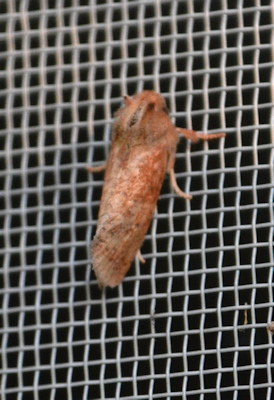
So what have we had this spring in any of the categories? First, a planthopper that hasn’t been IDed yet…it’s been photographed, but not as well as I’d like. It was on the kitchen windowscreen one late afternoon, and the next day (when the light might’ve been better) it wasn’t.
 Read the rest of this entry »

Jul 20
Posted: under photography, Wildlife.
Tags: beauty, insect, photography July 20th, 2010
Today when hanging up the wash, I spotted something small on the end of a clothespin that was hanging upside down from the line. It was the same mottled dull gray-brown as the clothespin itself, and it was between the V of the angled ends. I carefully removed the clothespin from the line and put […] [...more]
Today when hanging up the wash, I spotted something small on the end of a clothespin that was hanging upside down from the line. It was the same mottled dull gray-brown as the clothespin itself, and it was between the V of the angled ends. I carefully removed the clothespin from the line and put it on the table, then went to get my camera. After a fruitless search for the macro lens (I put it somewhere safe. Very safe. Too safe) I had to use the zoom lens, which is a sort of zoom macro but won’t focus closer than about 18 inches. Read the rest of this entry »
Jul 09
Posted: under photography, Wildlife.
Tags: beauty, dragonfly, insect, odonates, photography July 9th, 2010
Today, after the rains of the past two weeks–and then a hot sunny midday–we had more species of odonates at the lily pond than I’ve seen yet this year. And the males all wanted a landing site on this stick: [...more]
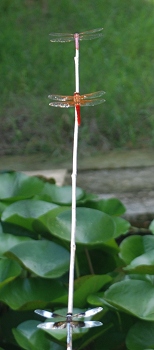
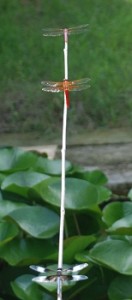
Today, after the rains of the past two weeks–and then a hot sunny midday–we had more species of odonates at the lily pond than I’ve seen yet this year. And the males all wanted a landing site on this stick:
 Read the rest of this entry »
Jul 01
Posted: under photography, Plantlife, Water, Wildlife.
Tags: Animal behavior, beauty, dragonfly, insect, observation, odonates, photography July 1st, 2010
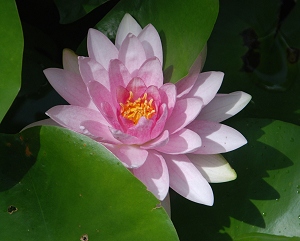
When I went out yesterday about noon, I found four of these lovely pink waterlily flowers open: [...more]
When I went out yesterday about noon, I found four of these lovely pink waterlily flowers open:
 Read the rest of this entry »
Jun 06
Posted: under photography, Plantlife, Wildlife.
Tags: beauty, butterflies, insect, photography, prairie restoration June 6th, 2010
A few pictures from a week ago, May 30, and also from yesterday, June 5, as what’s blooming and in what abundance changes rapidly–especially in the hot, dry weather we’re having. (We did get 3/10 of an inch of rain. It barely wet the ground.) Variegated Fritillary, Euptoita claudia, on Gaillardia [...more]
A few pictures from a week ago, May 30, and also from yesterday, June 5, as what’s blooming and in what abundance changes rapidly–especially in the hot, dry weather we’re having. (We did get 3/10 of an inch of rain. It barely wet the ground.)
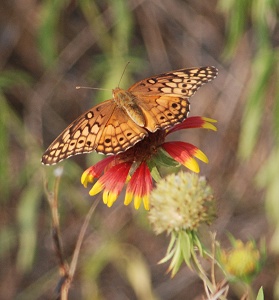 Variegated Fritillary, Euptoita claudia, on Gaillardia
Read the rest of this entry »
May 10
Posted: under Activities, photography, Plantlife, Wildlife.
Tags: Activities, Animal behavior, beauty, butterflies, identification, insect, native plants, new species, photography, wildlife management May 10th, 2010
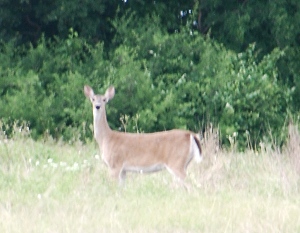
Because of time constraints (working on copy edits for new book) and weather, the brief walk on the land Saturday didn’t produce any usable bird pictures and I didn’t see any snakes or lizards, but I did see wildlife, large and small: [...more]
Because of time constraints (working on copy edits for new book) and weather, the brief walk on the land Saturday didn’t produce any usable bird pictures and I didn’t see any snakes or lizards, but I did see wildlife, large and small:
 Read the rest of this entry »
Apr 30
Posted: under Activities, photography, Wildlife.
Tags: beauty, documentation, insect, new species, photography April 30th, 2010
Crane flies are odd insects with long legs relative to their body size–they’re mistaken sometimes for giant mosquitos, which they aren’t. For such delicate looking creatures, they’re important in the ecosystem: crane fly larvae feed mostly on fungi, decaying organic matters, sometimes on plant rootlets–some are predatory. The adults are food for birds. There are […] [...more]
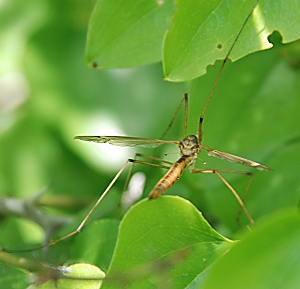
Crane flies are odd insects with long legs relative to their body size–they’re mistaken sometimes for giant mosquitos, which they aren’t. For such delicate looking creatures, they’re important in the ecosystem: crane fly larvae feed mostly on fungi, decaying organic matters, sometimes on plant rootlets–some are predatory. The adults are food for birds. There are roughly 1600 species of these guys north of Mexico.
Here’s one of our craneflies I’ve seen just about every year:
 Read the rest of this entry »
Apr 24
Posted: under Wildlife.
Tags: beauty, insect, observation, photography April 24th, 2010
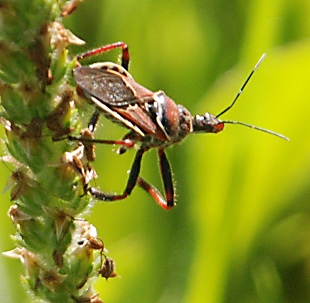
Always fun to find a new (to us) species for the list, even when it’s a small assassin bug: [...more]
Always fun to find a new (to us) species for the list, even when it’s a small assassin bug:
 Read the rest of this entry »
Mar 18
Posted: under photography, Plantlife, Wildlife.
Tags: beauty, insect, native plants, photography March 18th, 2010
It’s not fully open yet, but we count “first bluebonnet” from the first “bonnets” being open, so this counts. You can see one not as far along in the background. [...more]
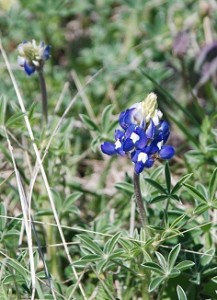
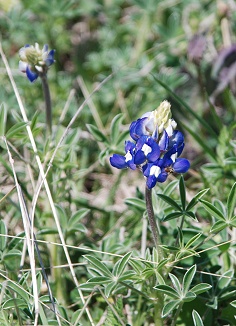
It’s not fully open yet, but we count “first bluebonnet” from the first “bonnets” being open, so this counts. You can see one not as far along in the background.
Read the rest of this entry »
Feb 17
Posted: under photography, Plantlife, Wildlife.
Tags: beauty, butterflies, insect, native plants, photography February 17th, 2010
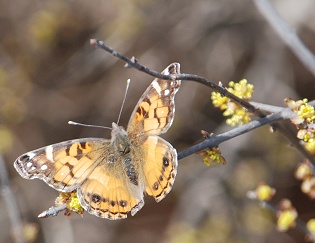
Elbowbush, either Forestiera pubescens or F. angustifolia (we have both species), is the first of our woody plants to flower in spring, and yesterday the first of the elbowbushes on the north fenceline west of the dry woods was opening. [...more]
Elbowbush, either Forestiera pubescens or F. angustifolia (we have both species), is the first of our woody plants to flower in spring, and yesterday the first of the elbowbushes on the north fenceline west of the dry woods was opening.
Read the rest of this entry »
 RDF/RSS Feed
 Atom Feed