Apr 19
Posted: under photography, Plantlife, Wildlife.
Tags: Animal behavior, beauty, native plants, photography, snake April 19th, 2009
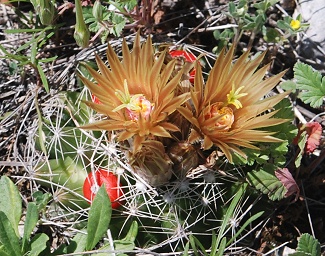
Plains Nipple Cactus, Coryphanta missouriensis, is a small, inconspicuous ground-hugging cactus that almost disappears (shrinks a lot) after between flowerings. Unless you know where you have a patch, you do not see it then. But when it flowers, it opens elegant little flowers with long, pointed petals. The lacy pattern of the spines on the […] [...more]
Plains Nipple Cactus, Coryphanta missouriensis, is a small, inconspicuous ground-hugging cactus that almost disappears (shrinks a lot) after between flowerings. Unless you know where you have a patch, you do not see it then. But when it flowers, it opens elegant little flowers with long, pointed petals. The lacy pattern of the spines on the plant, and the starry shape of the flowers, makes this one of the spring joys around here.
Read the rest of this entry »

Apr 15
Posted: under photography, Plantlife.
Tags: beauty, native plants, photography April 15th, 2009
Despite the way their roots attack the pumps, we plant water iris in the larger permanent water features: they offer desirable habitat for odonates above water, and shelter for tadpoles, red-lined ribbon snakes, and other aquatic critters below the water surface. And though the “land” iris isn’t native here, I enjoy the older varieties that […] [...more]
Despite the way their roots attack the pumps, we plant water iris in the larger permanent water features: they offer desirable habitat for odonates above water, and shelter for tadpoles, red-lined ribbon snakes, and other aquatic critters below the water surface. And though the “land” iris isn’t native here, I enjoy the older varieties that still mark out house-sites and yards in fields where a homesteader’s house has long vanished.
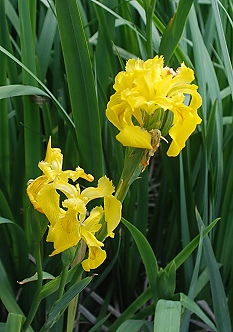
This robust yellow water iris multiples quickly and once more we need to yank about half of it out of the big pond–but it’s attracted hummingbirds and butterflies as well as the odes that perch on it and (some of them) use the stems to lay their eggs in.
Read the rest of this entry »
Apr 09
Posted: under Plantlife, Update, Wildlife.
Tags: census, native plants, wildlife management April 9th, 2009
http://www.80acresonline.org/ Species lists are now live on the website. When you mouse over the Species List, three choices appear: birds, plants, and “zoology” (which in this instance means non-bird wildlife.) And each of these lists has three pictures of representative species up there on the top green line. So if you’re been wondering what we […] [...more]
http://www.80acresonline.org/
Species lists are now live on the website. When you mouse over the Species List, three choices appear: birds, plants, and “zoology” (which in this instance means non-bird wildlife.)
And each of these lists has three pictures of representative species up there on the top green line.
So if you’re been wondering what we have…there it is.
Apr 05
Posted: under photography, Plantlife, Wildlife.
Tags: beauty, observation, photography April 5th, 2009
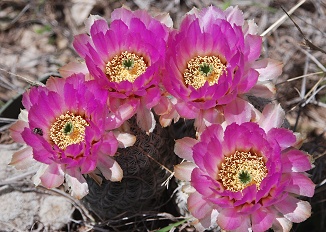
Though our prickly pear cactus has been hit by a disease or parasite, as well as the drought, a beautiful lace cactus, Echinocereus reichenbachii, that a rancher lady gave me off her place is thriving. They used to be common on the gravelly-rocky hills around here, but they’re salable and have been pirated off some […] [...more]
Though our prickly pear cactus has been hit by a disease or parasite, as well as the drought, a beautiful lace cactus, Echinocereus reichenbachii, that a rancher lady gave me off her place is thriving. They used to be common on the gravelly-rocky hills around here, but they’re salable and have been pirated off some slopes where I used to see them every spring.
 Read the rest of this entry »
 RDF/RSS Feed
 Atom Feed